What people mean by book character pumpkins
The goal is simple: pick a story kids know, paint or decorate a pumpkin to match, and label the book. Reading week and Halloween land in the same season, so many families and classrooms run this project in October.
The best designs use one bold silhouette, two flat colors, and one prop everyone recognizes—picture-book simple on purpose.
Easy book character pumpkins to try first
Match difficulty to age. Kindergarten rooms need big eyes and thick stripes; upper elementary can add glasses, crowns, or a second color block for a shirt.
These descriptions avoid copying cover art line-for-line—they give you a paint plan similar to what teachers share on craft boards.
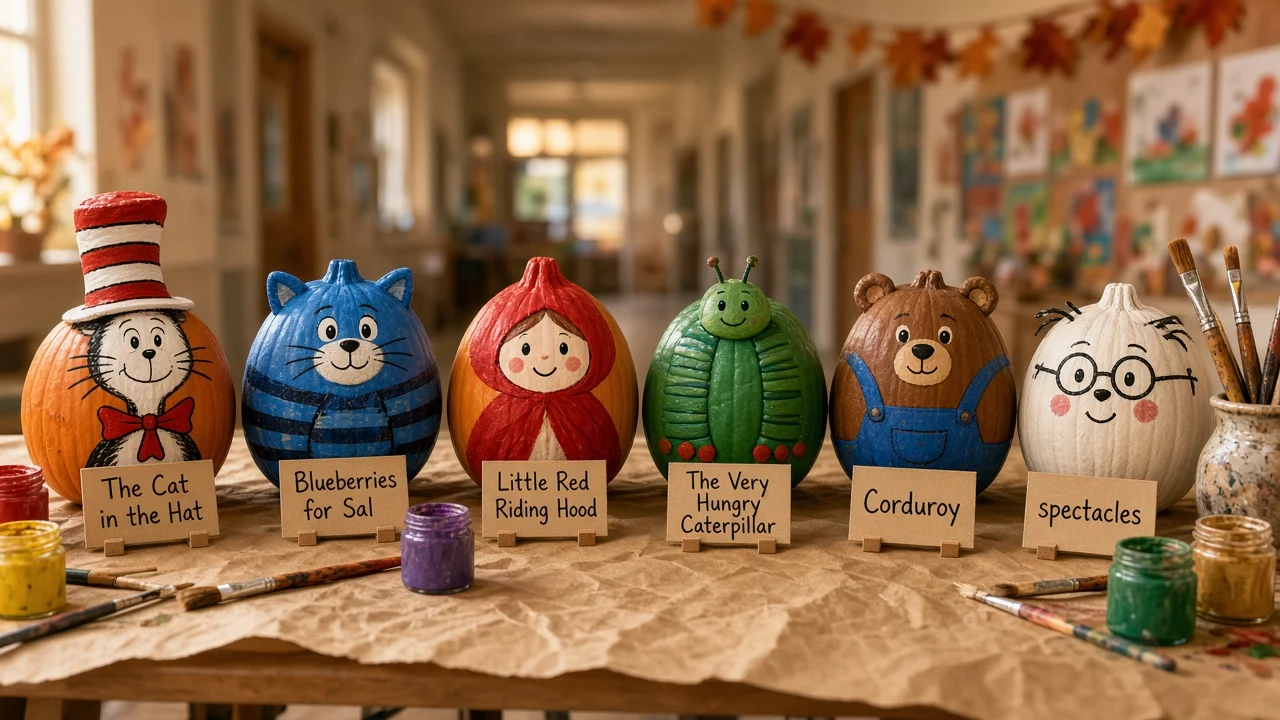
- Striped hat cat: orange pumpkin, white and red stripes on the stem area, black marker whiskers
- Blue cat: sky-blue base, yellow eyes, small red shoes as a foam cutout
- Hungry caterpillar: green segments with a red head; add soft bumps with cotton balls
- Corduroy bear: brown oval, green overalls as felt glued on, one button
- Red hood: red paint everywhere except a sem-circle face; short black hair with marker
- Round glasses boy: peach paint, thick black circles, purple shirt triangle below the face
Paint beats deep carving for story faces
Picture-book faces fall apart when you carve thin lines. Acrylic or craft paint plus a few foam props survives a week in a hallway and is easier for kids to copy from a reference printout.
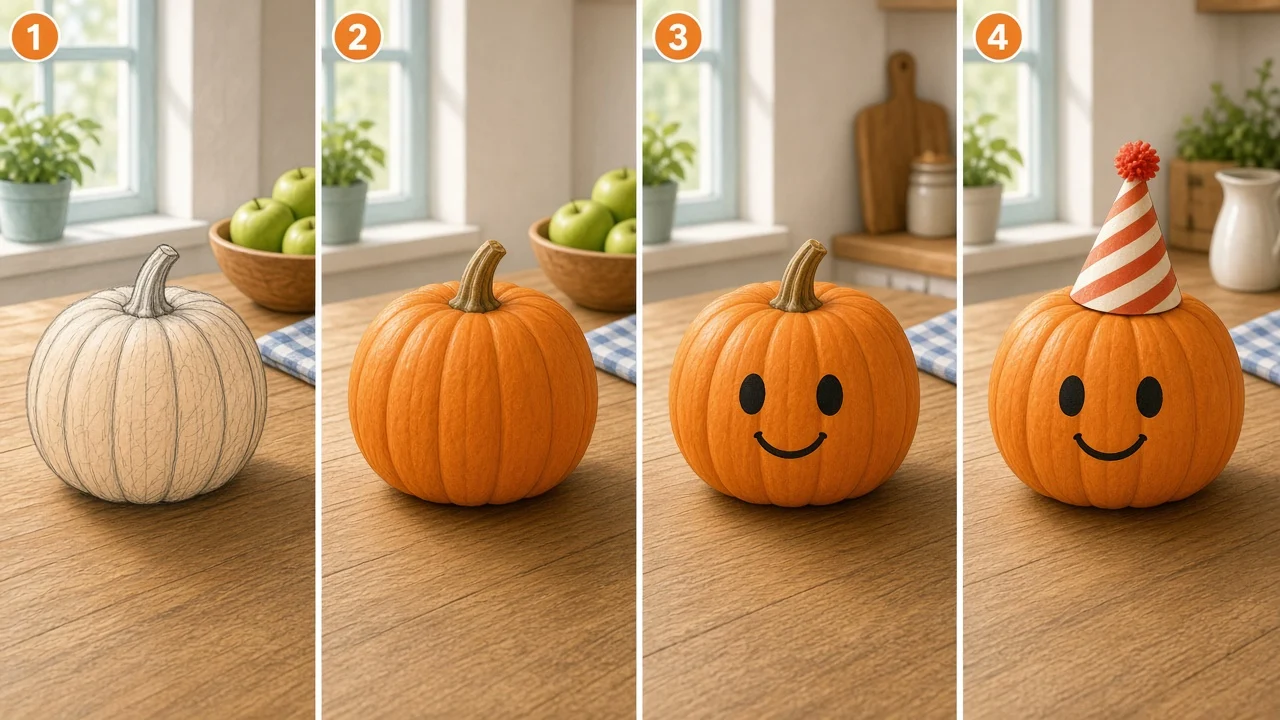
Trace large shapes with pencil, fill flat color, let dry, then add eyes and mouth last so smudges are easy to fix.
Storybook pumpkin patch for classrooms
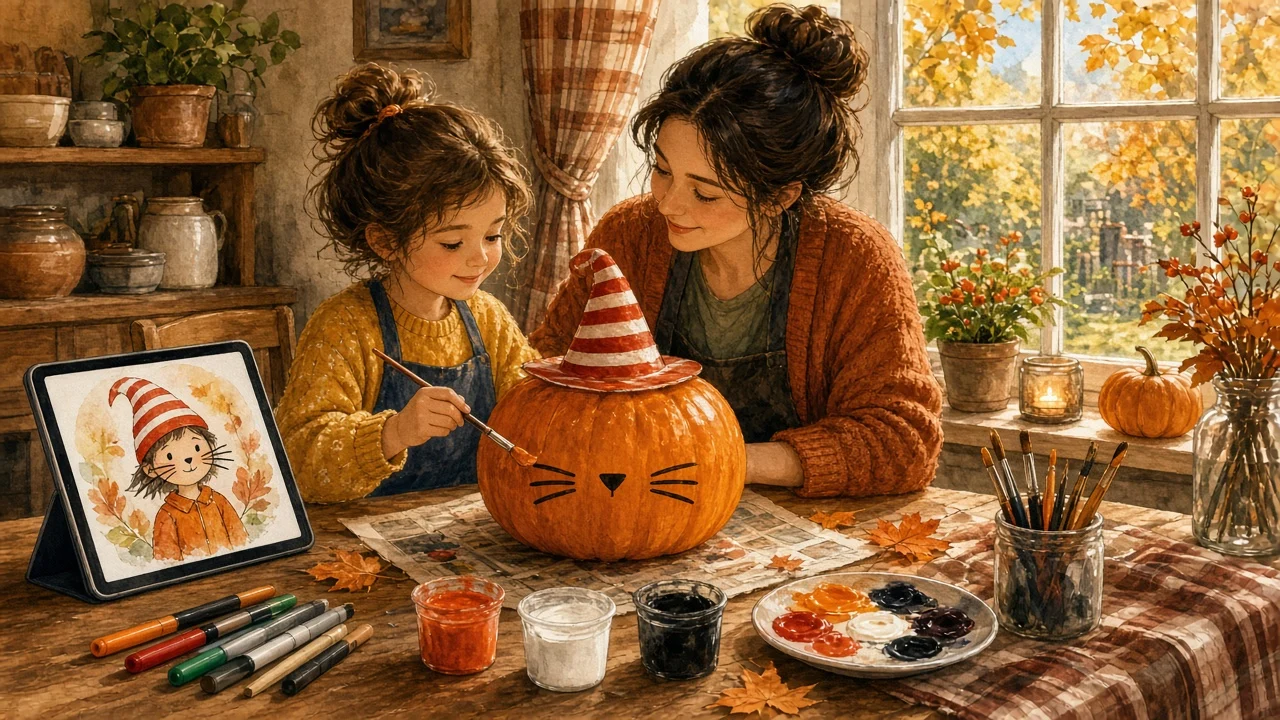
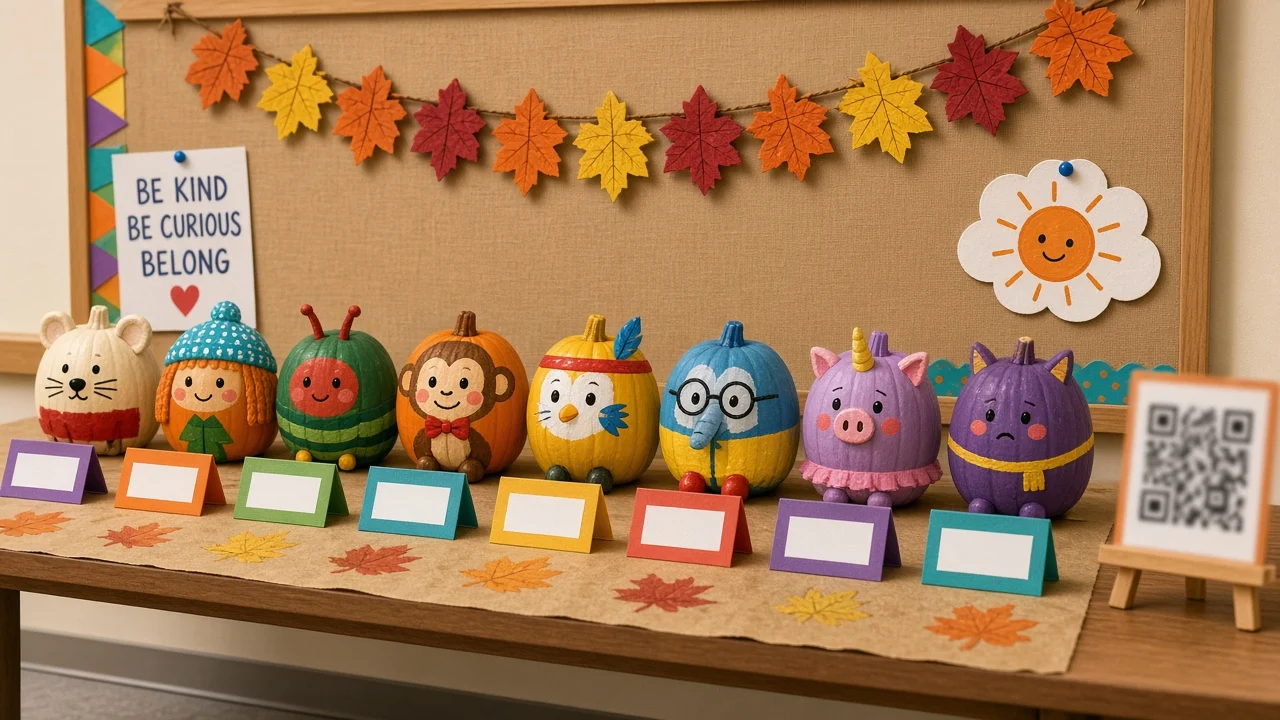
A storybook pumpkin patch is a row of labeled pumpkins in the hall—each tied to a different title. Sign up students for unique books before paint day so you do not end up with ten identical wizards.
Place a title card in front of each pumpkin. Optional: host a guess-the-character night, then read the real book aloud on Friday.
- Model one pumpkin start-to-finish the day before
- Photograph pumpkins only for newsletters if student privacy is tight
- See the classroom teachers guide for consent and sharing rules
After paint night: one character, one little book
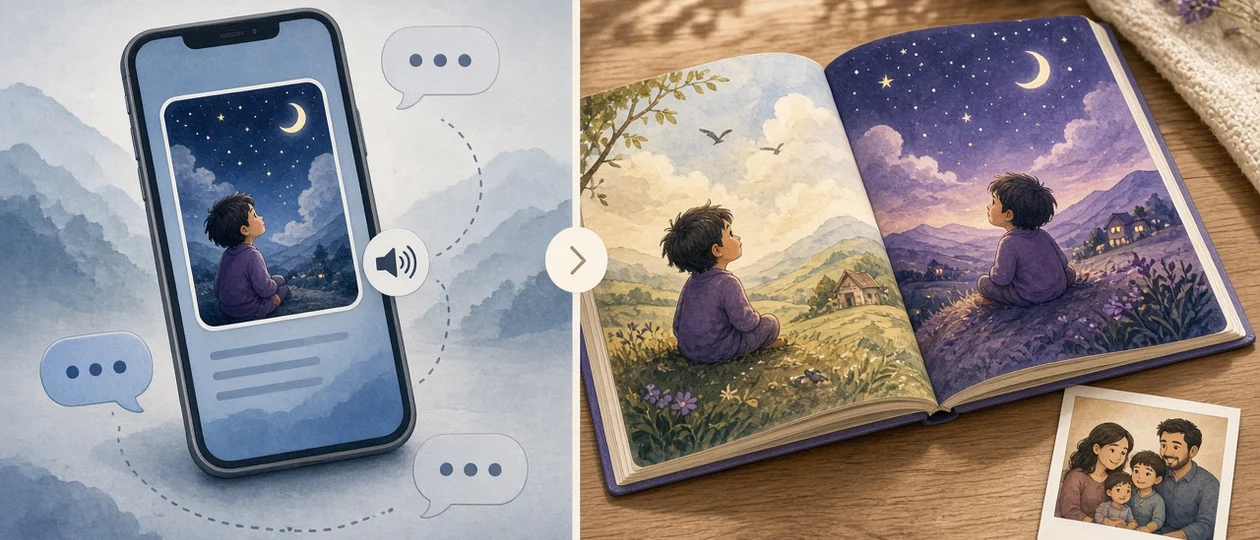
Paint night is easier when one reference stays the same for the pumpkin, a costume, and a homemade book. Generate a front-facing storybook portrait, screenshot it for the table, and optionally expand into an eight-page class story about your patch.
Start from the full storybook pumpkin guide or the four-step paint walkthrough. Families remember the project when they can re-read the book after the pumpkins are gone.